Tension Headache Remedy

Tension headaches are those thought to be triggered by prolonged muscle contraction in the neck, jaw and head.  This can be voluntary and subconscious (nervous or habitual), or involuntary in response to stressful situations.

Oftentimes when I take a history from a patient complaining of frequent tension headaches, I discover that the patient also has jaw pain.  This could be a sign that the patient is grinding his/her teeth either during sleep or throughout the day.  Worn down tooth surfaces in the molars are also a sign of grinding teeth.

When one grinds or clenches the jaw, two bilateral (both sides of the head) muscle  groups are engaged:  the masseter, which is the thick muscle you can palpate right over the angle of the jaw; and the temporalis, which anchors to the side of the head and attaches to the mandibular notch.  These two muscles elevate the mandible (lower jaw).

When a muscle is under tension (also referred to as hypertonic or hyperactive) it is basically malfunctioning.  Muscles control joint movement, and if the muscle is not working properly it can activate tiny nerves called mechanoreceptors and nociceptors embedded around the joint, causing pain.

When the temporalis muscle is under tension, it can affect blood flow around the scalp, which can also develop into a headache.

So, what can one do?  Here’s a simple remedy that has anecdotal evidence to support it:  open your jaw and relax it.  To make it easier, insert a pencil or pen in between your teeth (but don’t bite down on it!) and hold it in place for a few minutes.  This action inactivates the masseter and temporails muscles somewhat by activating their agonist pair, the pterygoid muscles.

Give it a try next time you feel a tension headache coming on.  But better yet, focus on eliminating the environmental or emotional triggers that cause you to clench your teeth or tense up your neck and head muscles.

Foot Pain Can Be Caused By This

Image via Wikipedia

If you have pain in your feet, it could be that your feet’s intrinsic muscles are weak and are not supporting and moving your foot bones properly during gait (walking).   As a result, certain bones can bear more weight pressure than others and develop pain; for example the first metatarsal-phalangeal joint (big toe joint).

Muscles can become weak when they are underused, or immobilized in some way over a long period of time.  For example, if you fracture your lower leg and had to wear a cast for three months, that leg would be smaller than the non-injured leg after taking off the cast.  This is because the calf muscle in the injured leg would experience some atrophy due to three months of decreased muscle activity.  You would most likely feel the difference in leg strength as well, after removing the cast.

But what would cause the foot muscles to weaken?  It’s a very simple action just about everyone does in the morning  before going to work, and that is putting on shoes.  Shoes, especially snug fitting ones like lace-up formal leather shoes with hard heels constrict the feet and don’t allow proper engagement of the foot joints when walking.  Basically, shoes act like a cast or splint on your feet.  Imagine wearing a shoe-equivalent on your hands, lacing them up tightly for nine hours a day.  Your hands would weaken eventually, and probably experience pain.

So what’s the solution?  Realize that the feet are designed to grip the ground with the toes/ forefoot, and elongate slightly at the arch to build up energy for toe-off during gait.  The toes splay out when bearing weight to increase stability to the body above.  Wearing shoes inhibits all these actions and can have an adverse effect on foot biomechanics.

Therefore, it is a good idea to exercise your feet by walking barefoot; preferably on a non-flat surface.  Find a grassy park and try running barefoot.  These activities will offer badly needed exercise (strengthening and stretching) for your feet.  If you’re like most people who have been wearing shoes most of their lives, your feet will be highly sensitive to the pebbles and small objects on the  ground; this is normal.  Keep walking and running barefoot as much as you can, breaking them in but obviously avoiding sharp objects on the ground.  This will strengthen your feet and make it more resistant to developing foot problems.

If you arent’ into going barefoot, the next best thing is to wear the Vibram Five Fingers KSO – Men’s walking “shoe.”  It offers the protection of a shoe, while offering the most freedom of movement of your feet.

How to Stop Tension Headaches

Headaches come in many different forms; too many to include in one post.

The causation can be neurological, vascular, mechanical, chemical and even psychosomatic.  Diagnosis can be challenging, as most headaches have the common symptom of, well, head ache.  The factors that vary include duration, location of pain (back of head, front of head, one side of head), pain pattern (constant, pulsating, repeating), and accompanying symptoms (dizziness, nausea, sensitivity to light and sound, auras).

This post is about tension headaches, perhaps the most common type.

Symptoms include constant, pressure like pain often described as a tightening band around the head.  The muscles of the back of the neck and tops of the shoulders are usually hypertonic (tense and taught).   Pain is felt behind the eyes.  Tension headaches can be mild to the point where the person goes on about his day until it wears off; or they can be intense and incapacitating, causing the person to take aspirin or Tylenol.

It is generally believed that tension headaches can be triggered by stress, dehydration, working in front of a bright computer monitor for extended periods; looking at a screen (TV, computer, movie screen) that has constantly moving images with changing light; and engaging in heavy mental tasks (studying, calculating numbers, reading conceptually-complex material like law cases, etc.).

More esoteric causes are previous trauma that affected the neck, like a car crash, and environmental stimuli (pollen, mites, carpet fumes, atomized copier toner, exposure to hazardous chemicals).

In my experience, people who have a history of severe whiplash from a car accident are more likely to have recurring tension headaches.  Even if the accident was ten or more years ago.

Whiplash is the violent, alternating extension and flexion of the neck due to a short but powerful impact force or short acceleration-deceleration.  Low impact car accidents and a jerky roller coaster ride are common examples.

The accident can leave the cervical (neck) vertebrae out of proper position relative to adjacent vertebrae, and change the dynamics of neck movement.  Nerves that regulate muscle contraction in the neck and and back of head can get injured or stretched as a result, and can cause the muscles to stiffen during certain times.

TREATMENT:

If you are engaging in heavy mental activities, give yourself a couple of hours break.  Turn off the TV; stay away from the computer and all screens for that matter.  Basically, you want to shut off excessive visual stimulation.

Seek silence and solace.  Find a nice park,  go for a nature hike.  Another option– meditate in a dark room; concentrate on deep breathing and  relaxing the muscles in the back of your neck and throughout your body.  Drink water throughout the day.  No coffee or cigarettes; they are stimulants.  No alcohol.

Place an ice pack on your forehead (put kitchen towelette on your forehead to prevent ice burn), OR one under your neck with a cervical roll supporting it (DON’T do both, the coldness may be too much stimuli).

If you have a history of a whiplash car accident, and you get tension headaches quite regularly, there’s a very good chance you have misaligned cervical vertebrae affecting your cord and/or nerve roots.   Probably a “reversed” curve, which looks like a “kink” or sudden angle change on a side-view neck x-ray. You will want to do exercises to stretch the neck and get it back to a lordotic curved shape.

Use a neck roll to bend your neck into a lordotic (reverse C- shape) curve while lying on your back on the floor.  Simply touch the floor with the back of your head ten times by arching your neck over the roll.  Then, turn and stretch your neck to the left and hold for 2 seconds; then to the right and hold for 2 seconds; 10 times to each side.  Do 3-4 times throughout the day.

You may also consider getting evaluated by an experienced chiropractor, and definitely getting a neck x-ray to visualize the shape of your cervical spine.   Adjustments, exercises, and lordotic traction can help bring your neck into proper alignment, and reduce pressure to your nerves, saving you from those annoying headaches.

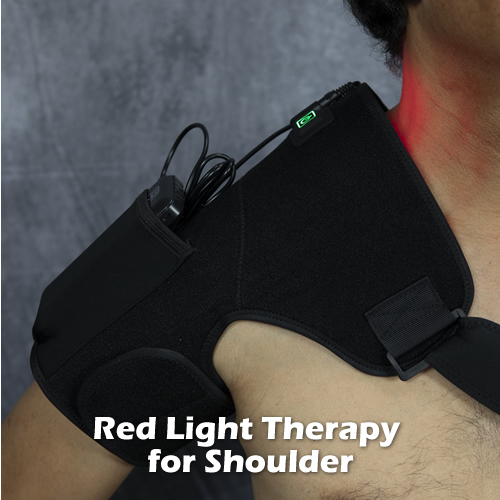
Lastly, consider using red light and pulsed EMF to eliminate tension headaches.  This is a good investment if you have recurring headaches.

Red light therapy is using 630 nm wavelength light to reduce pain and inflammation.  Light at this wavelength gets absorbed by cell structures and basically increases circulation, vasodilates blood vessels and dampens inflammation.  Some tension headaches are vascular in nature, so this should help reduce symptoms.

Pulsed EMF is the application of weak electromagnetic fields to the body, to provide extra energy for cells needing it.  It tends to improve cell membrane transport of nutrients and waste, and improve molecular transport including red blood cell mobility.

Watch this video I made that explains how to do it:

When You Get Whiplash Neck Pain from a Car Accident

When You Get Whiplash Neck Pain from a Car Accident

Ever get rear-ended while waiting in traffic or at a stop sign?  It’s a scary moment:  the calmness of being out in your car is viciously interrupted by screeching tires and a loud crash and bending metal.  It’s over in two seconds, but a lot happens to your body in that one second.

If a high speed camera was available to record your mishap, it would show your body violently moving forward with the car, back sinking into your car seat, your head slowly arching backwards at an unnatural angle; your neck muscles tense up; your head coming to a  stop in its backwards path and then reversing directions to move forward again, through a complete arc until your neck is fully flexed forward in an unnatural position; coming to a stop again, and then reversing directions and fully extending a few degrees less than before, and then reversing and flexing forward again, then righting itself.  That is your basic whiplash injury.

You’ll notice your neck become stiff, but very gradually.  You may be a bit dazed, and have a headache come on in about an hour.  You’ll likely feel tired.

As the day wears on, your neck is getting increasingly stiff and painful.  You may feel the onset of soreness in your upper shoulders and upper back; even your lower back.  You may have pain in your chest wall where the seatbelt dug into.

2-3 days after the accident your neck will reach maximum stiffness.  You will have difficulty turning your neck.  You’ll find yourself turning your whole body in order to see to one side.

So what is happening?  You have sustained what’s called a cervical acceleration-deceleration sprain strain injury; commonly known as whiplash.  Car accidents are a common cause of whiplash, but they can occur on roller coasters and similar jerky rides, horse riding, sky diving, and even wild dancing.  When this happens, tiny tears develop in the muscle tissue and fascia (muscle covering) which starts to release the inflammatory products of swelling.  The swelling is gradual, like a pinhole leak, which explains why it takes 2-3 days to reach max pain.  What makes a whiplash worse than other sprain strain injuries is that, due to the flexibility of the neck, spinal ligaments also incur damage.

When your neck flexed violently forward, the capsular ligaments and interspinous ligaments likely got damaged.  The capsular ligaments hold your neck bones together from the back; the interspinous ligaments hold them together at the spinous processes (the bumps you feel along your spine are the tips of the spinous processes).

interspinous ligament rupture

When these ligaments injure, the swelling goes inside the joint space, building up pressure essentially splinting (immobilizing) the joint.  In severe cases, the ligaments can rupture (tear) causing dangerous instability, and you have a very serious condition that requires a visit to the ER.  A head halo support or neck brace is usually attached to prevent the instability from causing damage to your spinal cord.

TREATMENT:

Obviously, it’s a good idea to go to the hospital if you were involved in a significant car accident and feel you’ve been injured.  The ER doctor will rule out serious conditions like ligament rupture, bleeding in the brain (subdural hematoma), and bone fractures.  Once those are ruled out, he/she will diagnose you as having a sprain strain injury and will usually prescribe pain meds (anti inflammatories and muscle relaxants).  You will be given home care instructions.

With whiplash, the goal is to first reduce the pain and swelling.  You will do this by applying an ice pack to your neck.  Here’s a YouTube video on Whiplash Home Care – icing and stretches that illustrates the information to follow.

Buy two gel ice packs at your local drugstore (9″ x 6″ size); put in freezer.   Make a cervical roll using a small bath towel or hand towel:  roll it up tightly into a cylinder 1′ long with a radius of five inches.  Place it on the floor.

Place one ice pack on top of the roll, and one right under (next) to it.   Put a kitchen towlette on top of the ice to prevent iceburn.  Lie down, face up with the center of the back of your neck on top of the cervical roll/ice pack.  The other ice pack is for your upper back muscles.   Put a pillow under your knees for comfort, dim the lights and rest for 20 minutes.  Repeat this every two hours, for 2-3 days.

On the second day, while icing slowly turn your neck to the right as far as you can, then to the left, then to center.  Then, arch your neck and touch the carpet with the crown of your head and hold for 20 seconds.  Repeat these motions ten times.  Do this for each of your icing session, still at 20 minutes every 2 hours.  This helps to regain full neck range of motion.

On the 4th day, alternate ice with 10 minutes of moist heat using a hot water bottle with 150 degree water heated on your stove, and a wet face towel for heat conduction, on your neck and back muscles.

As the pain decreases, engage in active stretching exercises.  About two weeks post crash, or when the pain has gone down 90% and you have full range of motion in your neck, do neck strengthening exercises.  It is important to do these rehab exercises as they help align the reparative tissue in the axis of contraction of the muscles.  This will help reduce the chances of chronic pain and loss of range of motion following the accident.

Since the original publication of this article, I’ve researched a new modality called Pulsed Electromagnetic Field therapy, or Pulsed EMF, or PEMF for short.  The link explains it in detail, but basically  it is the external application of low frequency, low amplitude electromagnetic fields, similar to the natural EM fields your body produces, to impart energy to them.  EM fields are used to drive movement of molecules in and out of the cells, which includes nutrients, waste products, proteins and other factors involved in life processes.  When cells are sick or injured, this process is not efficient.  Pulsed EMF imparts a boost of energy (in fact, it is considered “Energy medicine”) which helps injured/sick cells perform their biological functions more efficiently, promoting accelerated healing and improved symptoms (less pain).

Apply PEMF to your neck three times a day for 15 minutes, for 2-3 days following the accident.  You should experience a noticeable reduction in pain each time, an hour or so after treatment.

Receive a FREE, 30-Day Plan to Boost Your Health and Eliminate Pain!

Receive a FREE, 30-Day Plan to Boost Your Health and Eliminate Pain!

As a subscriber, you'll also learn the special methods used by experts in human biomechanics to fix body aches and pain the RIGHT way, long term. 

We'll also send you a Free eBook, Concepts of Self-Healing as a way of saying thanks.

Please check your email in 5 minutes to access your Special Report. Make sure to whitelist "[email protected]" in your email client (Gmail, Yahoo, Outlook, etc.) so that you don't miss this valuable information. One way is to add this email to your email Contacts.