How to Stop Tension Headaches
 Headaches come in many different forms; too many to include in one post.
The causation can be neurological, vascular, mechanical, chemical and even psychosomatic. Diagnosis can be challenging, as most headaches have the common symptom of, well, head ache. The factors that vary include duration, location of pain (back of head, front of head, one side of head), pain pattern (constant, pulsating, repeating), and accompanying symptoms (dizziness, nausea, sensitivity to light and sound, auras).
This post is about tension headaches, perhaps the most common type.
Symptoms include constant, pressure like pain often described as a tightening band around the head. The muscles of the back of the neck and tops of the shoulders are usually hypertonic (tense and taught). Pain is felt behind the eyes. Tension headaches can be mild to the point where the person goes on about his day until it wears off; or they can be intense and incapacitating, causing the person to take aspirin or Tylenol.
It is generally believed that tension headaches can be triggered by stress, dehydration, working in front of a bright computer monitor for extended periods; looking at a screen (TV, computer, movie screen) that has constantly moving images with changing light; and engaging in heavy mental tasks (studying, calculating numbers, reading conceptually-complex material like law cases, etc.).
More esoteric causes are previous trauma that affected the neck, like a car crash, and environmental stimuli (pollen, mites, carpet fumes, atomized copier toner, exposure to hazardous chemicals).
In my experience, people who have a history of severe whiplash from a car accident are more likely to have recurring tension headaches. Even if the accident was ten or more years ago.
Whiplash is the violent, alternating extension and flexion of the neck due to a short but powerful impact force or short acceleration-deceleration. Low impact car accidents and a jerky roller coaster ride are common examples.
The accident can leave the cervical (neck) vertebrae out of proper position relative to adjacent vertebrae, and change the dynamics of neck movement. Nerves that regulate muscle contraction in the neck and and back of head can get injured or stretched as a result, and can cause the muscles to stiffen during certain times.
TREATMENT:
If you are engaging in heavy mental activities, give yourself a couple of hours break. Turn off the TV; stay away from the computer and all screens for that matter. Basically, you want to shut off excessive visual stimulation.
Seek silence and solace. Find a nice park, go for a nature hike. Another option– meditate in a dark room; concentrate on deep breathing and relaxing the muscles in the back of your neck and throughout your body. Drink water throughout the day. No coffee or cigarettes; they are stimulants. No alcohol.
Place an ice pack on your forehead (put kitchen towelette on your forehead to prevent ice burn), OR one under your neck with a cervical roll supporting it (DON’T do both, the coldness may be too much stimuli).
If you have a history of a whiplash car accident, and you get tension headaches quite regularly, there’s a very good chance you have misaligned cervical vertebrae affecting your cord and/or nerve roots. Probably a “reversed” curve, which looks like a “kink” or sudden angle change on a side-view neck x-ray. You will want to do exercises to stretch the neck and get it back to a lordotic curved shape.
Use a neck roll to bend your neck into a lordotic (reverse C- shape) curve while lying on your back on the floor. Simply touch the floor with the back of your head ten times by arching your neck over the roll. Then, turn and stretch your neck to the left and hold for 2 seconds; then to the right and hold for 2 seconds; 10 times to each side. Do 3-4 times throughout the day.
You may also consider getting evaluated by an experienced chiropractor, and definitely getting a neck x-ray to visualize the shape of your cervical spine. Adjustments, exercises, and lordotic traction can help bring your neck into proper alignment, and reduce pressure to your nerves, saving you from those annoying headaches.
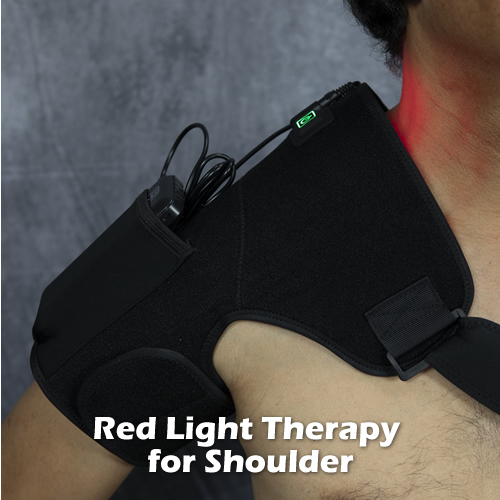
Lastly, consider using red light and pulsed EMF to eliminate tension headaches. This is a good investment if you have recurring headaches.
Red light therapy is using 630 nm wavelength light to reduce pain and inflammation. Light at this wavelength gets absorbed by cell structures and basically increases circulation, vasodilates blood vessels and dampens inflammation. Some tension headaches are vascular in nature, so this should help reduce symptoms.
Pulsed EMF is the application of weak electromagnetic fields to the body, to provide extra energy for cells needing it. It tends to improve cell membrane transport of nutrients and waste, and improve molecular transport including red blood cell mobility.
Watch this video I made that explains how to do it: